Key Takeaways
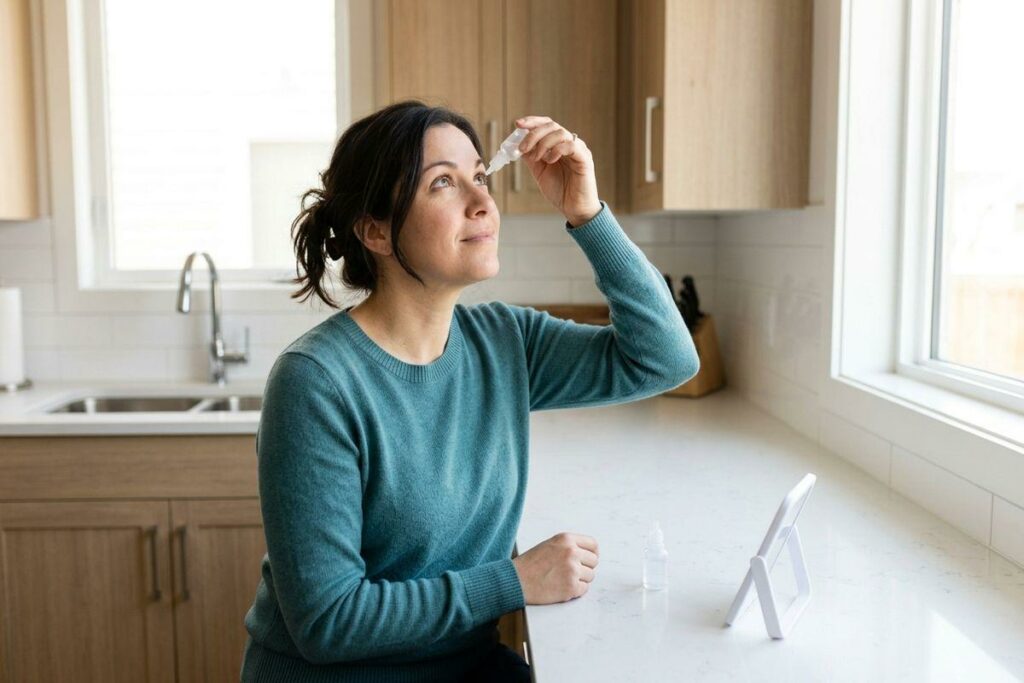
- Atropine drops can be applied nightly to help slow how fast nearsightedness progresses in children.
- Children aged 4 to 14 are typical candidates for this treatment.
- Low-dose atropine (0.05%) can slow progression by roughly half with minimal side effects.
- Glasses or contact lenses are still needed alongside atropine drops.
- Outdoor time and limiting close-up screen use can also support eye health.
It’s a stressful cycle for any parent: another annual eye exam, another stronger prescription, and the constant worry about your child’s changing vision. But watching their sight decline year after year doesn’t have to be the default.
Paired with other myopia control options, low-dose atropine drops offer a way to help protect your child’s sight. Instead of just reacting to vision changes with a stronger pair of glasses, this treatment helps slow the progression of nearsightedness while their eyes are still growing.
At our clinics, we work with families across Calgary, Olds, Sundre, and Carstairs to build customized myopia management plans. Our focus is entirely on protecting your child’s sight, with a treatment strategy tailored uniquely to them.
What Atropine Drops Actually Do
Atropine is a medication that’s been used in eye care for a long time. At low doses, it’s thought to help slow the rate at which the eye grows longer, which is associated with nearsightedness worsening over time.
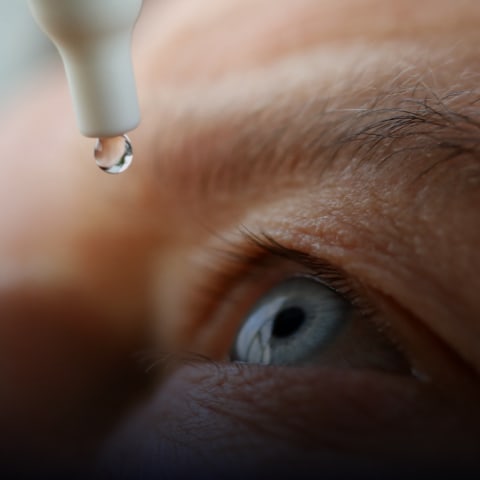
One thing worth knowing right away: atropine drops don’t correct your child’s vision. Your child will still need glasses or contact lenses to see clearly. The drops are typically applied nightly, and their job is to help slow progression, not sharpen sight.
Is Atropine Treatment Right for Your Child?
Age and Timing: Why Sooner Is Better
While children between the ages of 4 and 14 are the most common candidates, the real key to success is timing. Because nearsightedness tends to progress most rapidly during the school-age years, stepping in early can make a massive difference in your child’s adult prescription.
Think of it this way: a child who starts treatment while their nearsightedness is still mild will likely end up with much better vision later in life than a child who receives no intervention at all.
What to Expect at Your Appointment
We know that medical appointments can sometimes feel overwhelming, but our goal is to make this process as clear and comfortable as possible. During your visit, your eye doctor will take a close look at your child’s vision history to see how quickly their prescription has been changing.
Because every child’s eyes grow differently, we don’t believe in a one-size-fits-all approach. We will craft a treatment plan tailored specifically to your child’s unique needs, and walk you through every step of the exam process. You’ll have plenty of time to ask questions and get the clear answers you need to feel completely confident before making any decisions.
How Well Do Atropine Drops Work
Low-Dose vs. Higher Concentrations
Research on atropine has looked at several concentrations. The 0.05% dose has shown the ability to slow myopia progression by roughly half. That’s a meaningful reduction when you consider how much a prescription can shift year over year during childhood.
Higher concentrations were explored earlier, but they are associated with more side effects and don’t necessarily yield better long-term results. Low-dose atropine has become the more common recommendation for that reason.
Track Progress Over Time
Progress is measured by looking at prescription changes and sometimes by measuring the physical length of the eye. Neither of these is something you’d notice at home, which is why regular visits to an eye doctor matter so much during treatment.
Consistent check-ins allow the eye doctor to see whether the drops are working and adjust the plan if needed.
Safety and Side Effects: What Parents Need to Know
The great news is that at the low doses used in this treatment, atropine drops are typically well tolerated, and most children experience very few side effects.
While higher concentrations of atropine can cause light sensitivity or temporary blurring of up-close vision, these issues are usually minimal at a standard 0.05% dose. If your child does notice a little glare on bright days, a pair of quality, UV-protective sunglasses is a quick and simple fix to keep them comfortable outdoors.
A Quick Safety Reminder: Because these are medicated eye drops, just be sure to store the bottle safely out of reach of younger children, exactly as you would with any other household medication.
Other Ways to Help Slow Myopia Progression
Lifestyle Habits That Support Eye Health
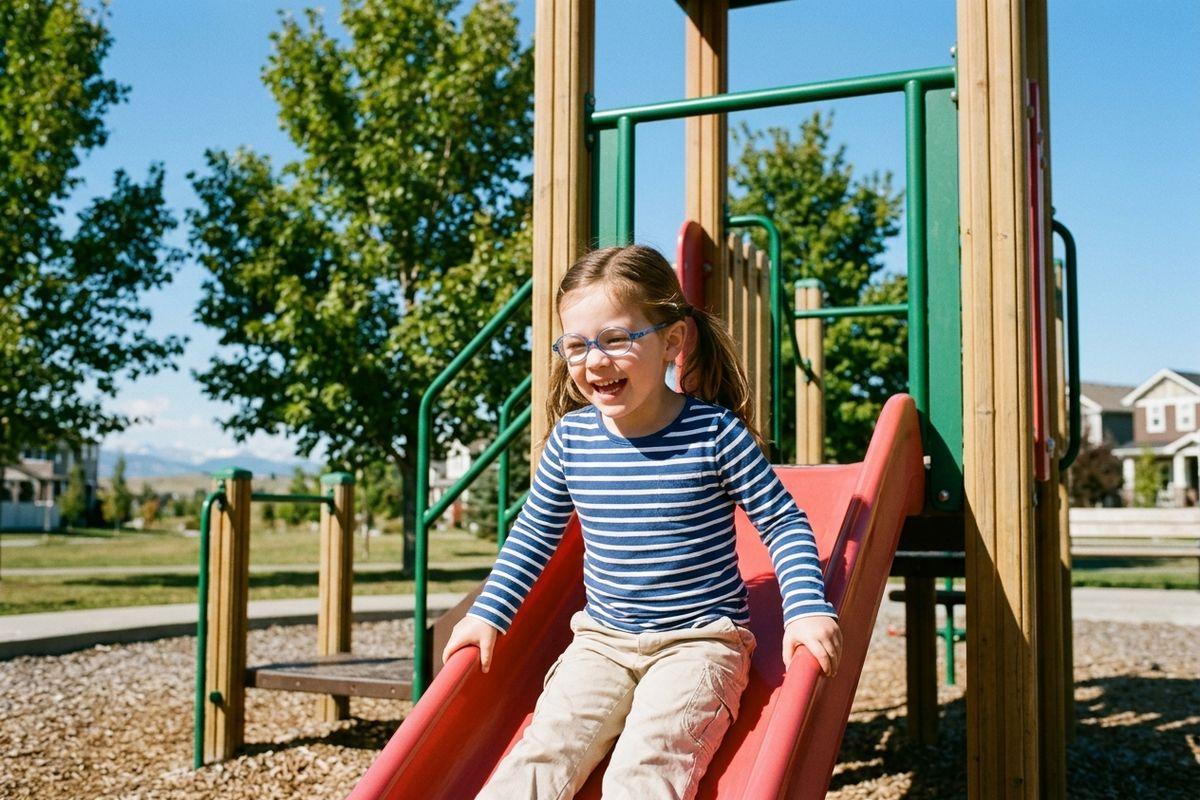
Atropine works well alongside some straightforward daily habits. Spending more time outdoors in natural daylight has been linked to slower myopia progression in children. Even an hour or two outside each day can make a difference.
Limiting long stretches of close-up screen time also takes pressure off developing eyes. Short breaks during reading or device use give the eyes a chance to refocus on distance.
Expanding the Toolkit
While we have great success with eye drops, atropine typically doesn’t work alone. Think of it as the ultimate superhero sidekick, teaming up with other treatments to pack a powerful double-punch against progressing nearsightedness.
Depending on your child’s age, hobbies, and everyday routine, an eye doctor might recommend pairing atropine with one of these innovative options:
- Orthokeratology (ortho-k): Specialized lenses worn only overnight to gently reshape the cornea, giving your child clear vision all day without glasses or daytime contacts.
- Myopia-control glasses and daytime contact lenses: Specially designed lenses that look and feel normal but feature built-in technology to actively slow down eye growth.
Because every child’s eyes and lifestyles are unique, there is no one-size-fits-all formula.
Talk to Our Team About Your Child’s Vision
If your child’s prescription has been changing year after year, it’s worth having a conversation about myopia management. Our teams at Bonavista Eye Care, Olds Eye Care, Sundre Eye Care, and Carstairs Eye Care take the time to review your child’s prescription history, answer your questions, and create a personalized treatment plan that fits your family’s needs. Reach out to book an appointment with an eye doctor in Olds, Sundre, Carstairs, or Calgary. Your child’s eyes are worth the conversation.